.png)
iMessage Campaign Sequences From Your Own iPhone
One thoughtful text is not a system. Plan short iMessage sequences that leave from your own iPhone so follow-up stays personal as volume grows.
Most follow-up fails for a boring reason: it stops after the first text. You send one thoughtful message, get silence, and move on-or you blast a second and third note from a rented number that no longer looks like you. Neither path builds a book of business.
What works is a campaign sequence: a short, intentional series of personalized iMessages that leave from your own iPhone. LightSend is built for that model. It is not a third-party iMessage API. Campaigns run from your device, in your blue bubble, under your name.
Here is how to design sequences that stay human while you stay consistent.
Why one-off follow-up underperforms
Prospects are busy. A single text competes with dozens of other threads, notifications, and work fires. Timing is random. Mood is random. Your perfect first message can land at the wrong minute and still deserve a second or third touch.
One-offs also leave no structure. Without a planned sequence, you either forget the lead or improvise under pressure-and improvisation at volume usually means shorter, colder copy. Sequences fix that by deciding the story in advance: what you say day one, what you add later, and when you stop.
What a good iMessage sequence looks like
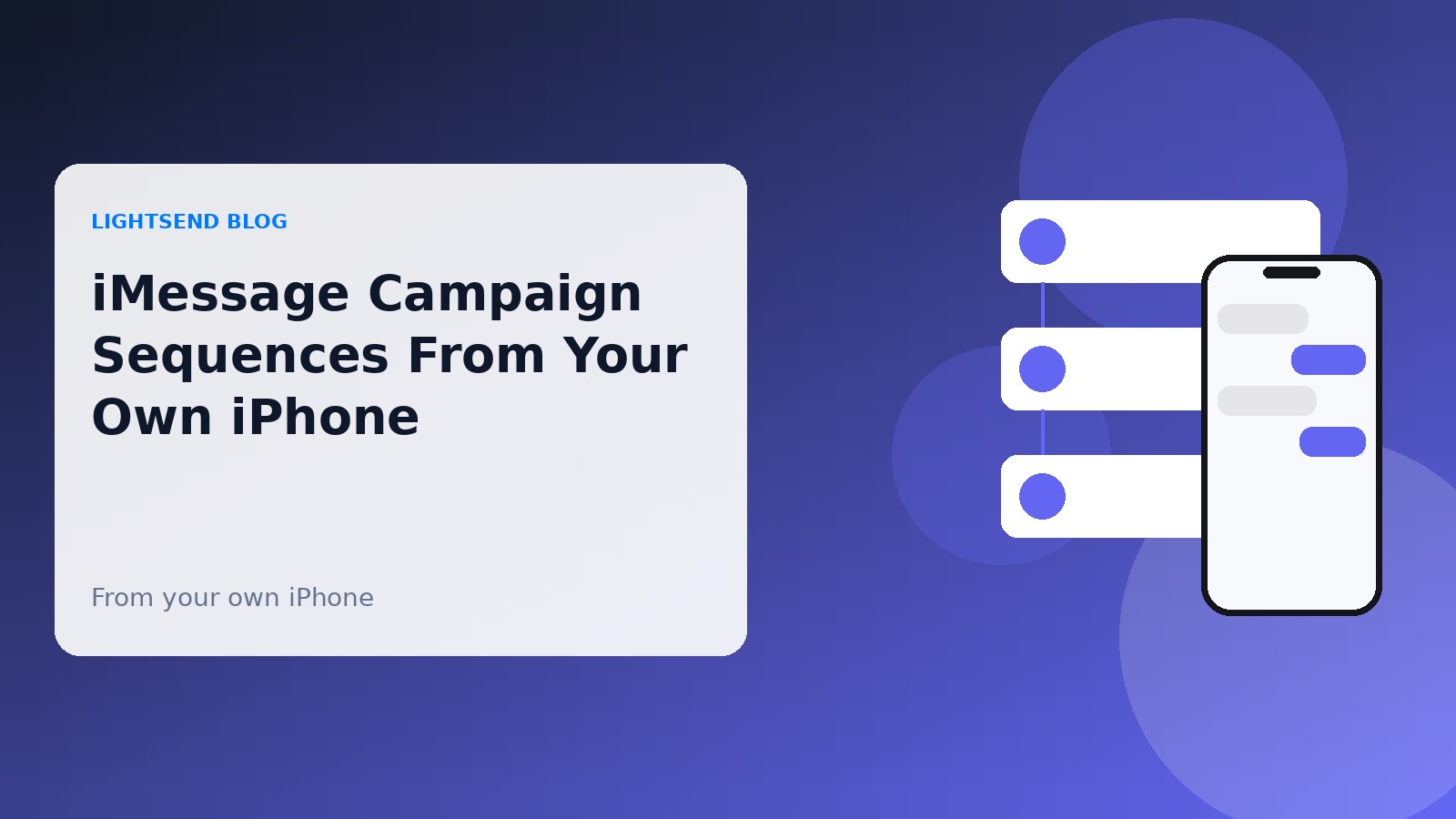
Keep it short. Three to five steps is enough for most sales, mortgage, and real estate follow-up. Each message should earn its place with a new reason to reply-not a louder version of the same pitch.
A simple pattern that travels well:
- Step 1 - Context. Remind them who you are and why you are writing. Reference the showing, quote, demo, or intro so the thread feels specific.
- Step 2 - Value. Share something useful: a checklist, a rate observation, a market note, or a clear next step. Avoid repeating the ask without new information.
- Step 3 - Soft close. Offer an easy reply option ("Want me to send two windows this week?") rather than a hard sell.
- Optional Step 4 - Breakup. A polite last note that gives them an out. Many replies arrive here because the pressure drops.
Space the steps. Same-day double texts feel needy. Waiting two weeks between every note feels abandoned. For most professional follow-up, one to three days between early steps, then a longer gap before the last note, works better than a daily drip.
Personalization that survives volume
Sequences only scale if personalization is built into the template, not added as a last-minute flourish. Name, first-touch detail, and the specific reason you are following up should change every time. The skeleton can stay the same.
That is the difference between a campaign and a blast. A blast is identical copy to a list. A campaign sequence is the same plan with different specifics-still from your phone, still in your voice. LightSend is designed for personalized iMessage campaigns from your own iPhone so that structure does not force you onto a third-party API or a shared sender identity.
If you sell into sales teams, borrower pipelines, or listing follow-up, the same rule applies: the sequence is the system; the details are what make each text feel one-to-one. For role-specific angles, see sales follow-up, mortgage follow-up, and real estate follow-up.
Own iPhone vs API-driven drips
API-driven drips promise volume. They also introduce a different number, a different bubble color for many recipients, and a thread that does not match how the prospect already knows you. People reply to people they recognize. When the sequence leaves your iPhone, recognition stays intact.
That does not mean you type every message by hand at 9 p.m. It means the send path stays yours while the cadence is planned. Consistency without the blast is the point-and it is why sequences are more durable than one heroic first text.
If you want the product picture of how LightSend structures campaigns on-device, start with LightSend features.
Practical rules for sequence copy
Write like you talk in Messages, not like a landing page. Short paragraphs. One idea per text. Questions that are easy to answer in a few words. Avoid links in every step; save a link for the message that needs it.
Do not escalate tone just because a step number went up. Step three should not sound angrier than step one. Escalate usefulness or clarity instead: a clearer offer, a tighter question, a cleaner out.
Track what you promised. If step one said you would send availability, step two should either deliver that or acknowledge the delay. Broken promises inside a sequence train people to ignore the next one.
When to stop
A sequence without an end becomes spam. Decide the last step before you start. If they never reply, close the loop politely and move them to a quieter nurture path-or leave them alone. Respect is part of deliverability, even on iMessage.
Stopping also protects your brand. Prospects who were not ready today may be ready next quarter. They will remember whether your follow-up felt like a person with a plan or a machine that would not quit.
Putting it together with LightSend
Build the sequence once. Personalize the fields that matter. Let the campaign leave from your iPhone on the schedule you chose. That combination-planned steps plus on-device identity-is how you stay consistent without sounding automated.
If you are ready to run personalized iMessage campaign sequences from your own phone instead of renting an API identity, try LightSend. Keep the plan. Keep the blue bubble. Keep sounding like yourself.